
There are a couple delineations of eras throughout NASCAR and ARCA history.
The major one was in 1972, when a revised race distances and a shortened (48 to 31) race schedule ushered in what is known as the “Modern Era.”
The big change for NASCAR’s Grand National Divisions – which encompassed the East and West Series – came in 2007, when NASCAR lowered the minimum age for drivers to compete in those series from 18-years-old to 16. This move primarily allowed NASCAR Cup Series teams’ development drivers a place to run before moving up to one of the three national series.
One of the first organizations to take advantage of this move was Joe Gibbs Racing, which had a pair of talented 16-year-olds in Joey Logano and Marc Davis.
The then NASCAR Busch East Series – which had gotten its starts as a New England-based regional Busch North Series – and the NASCAR West Series had been working on coming together for several years. The NASCAR Toyota All-Star Showdown was a non-points, all-star race in Irwindale, California, had its inaugural race in 2003 and helped bring the two series’ rule books into alignment.
Enter 2007, when the East and West schedules included a pair of championship races between the two series.
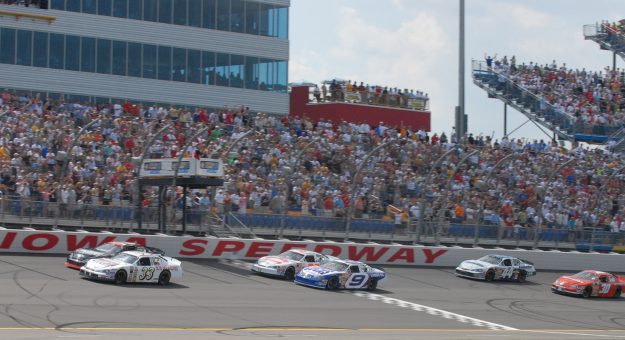
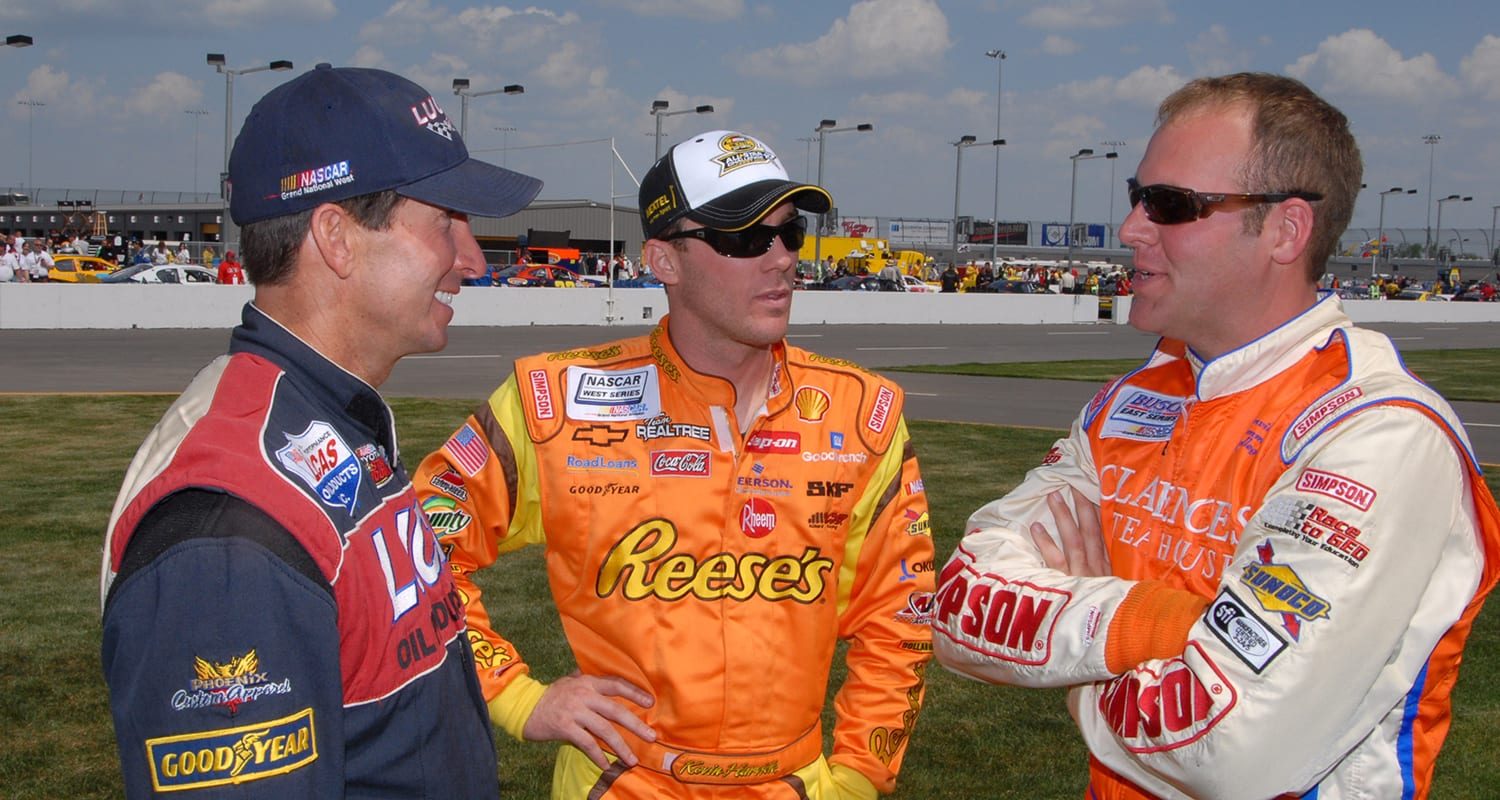
The first was the Minnesota 150 on Friday, May 18, at Elko Speedway. The two series would meet again two days later in the first NASCAR event at Iowa Speedway, the Featherlite Coaches 200. Adding some spice to the latter, former West champion and current NASCAR Cup Series driver Kevin Harvick was entered in the Iowa race.
The West was led by Mike David, who won at the old Altamont Motorsports Park in Tracy, California, and was third at Elko.
Scott Lynch, the 2003 West champion, won the season opener at Thunder Hill Raceway in Texas.
The second race of the season, at Phoenix International Raceway, was a sign of things to come, as Logano and Davis traveled West and went 1-2 in their series’ debuts. Logano also picked up the win in the East season opener 11 days later at South Carolina’s Greenville Pickens Speedway.
The ARCA Menards Series had opened the new Iowa Speedway in October of 2006, with Steve Wallace out-running Kraig Kinser and Justin Marks for the win.
This would mark the first NASCAR race at the facility just east of Des Moines.
When they got to Iowa, David had opened up a 100-point West Series lead over Tim Woods and 126 over rookie Jason Bowles. Johnny Borneman, Eric Hardin, Mike Duncan, Brett Thompson, Justin Lofton and Alex Haase were all in a bunch, separated by just 41 points from fourth to 10th.
The East field included series veterans such as Matt Kobyluck and 2006 champion Mike Olsen, along with RCR development driver Tim McCreadie, and DEI driver Jeffery Earnhardt.
It was young talented driver Sean Caisse, then 21, who entered Iowa with the East points lead by 35 over veteran Bryon Chew and 50 over Rogelio Lopez of Mexico. Logano finished 19th at Elko and was fifth in points, 56 behind Caisse.
Caisse had won three times en route to a runner-up finish in the championship in 2006, and arrived at Iowa having picked up the victory at Elko.
The hottest driver that Sunday, though, was Harvick.
In his seventh season in the Cup Series, he was coming off a fourth-place finish in the 2006 title race, and arrived in Newton fresh off winning a million dollars for his victory Saturday night in the 2007 Nextel All-Star Challenge at Charlotte Motor Speedway.


![visit Sunoco3c [converted] website - opens in the same window](https://www.arcaracing.com/wp-content/uploads/sites/36/2020/01/Sunoco3c-Converted-291x180.png "visit Sunoco3c [converted] website - opens in the same window")


