
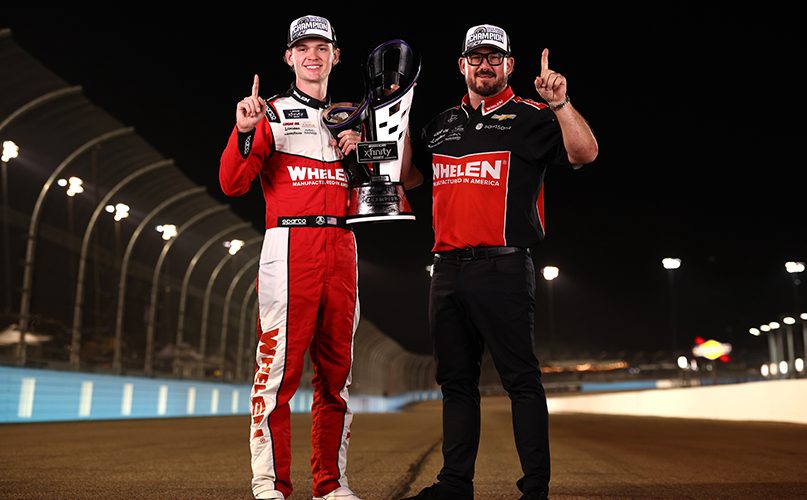
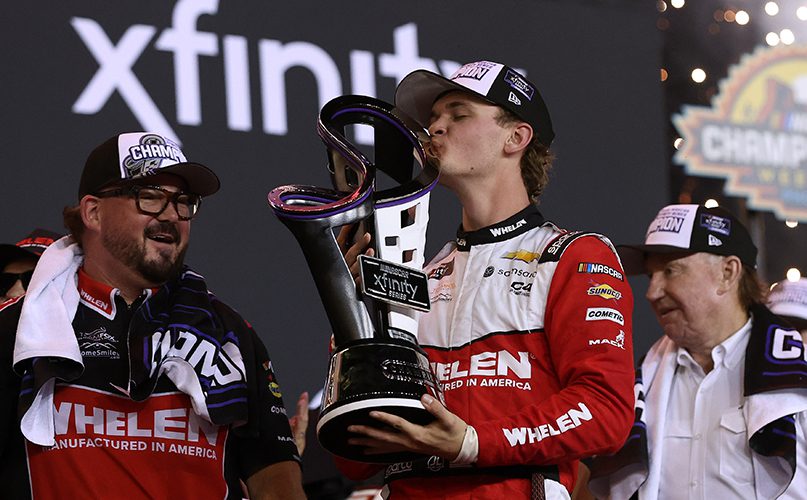
When Jesse Love clinched the 2025 NASCAR O’Reilly Auto Parts Series championship at Phoenix Raceway, one of many who celebrated the occasion was Madera Speedway owner Kenny Shepherd.
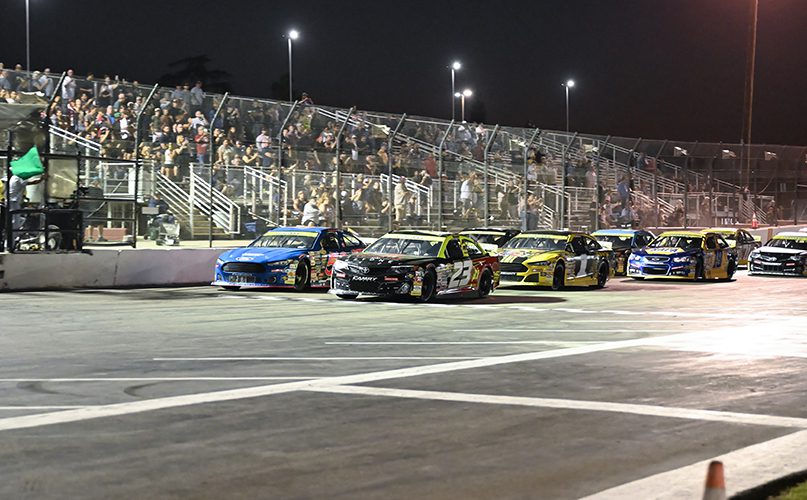
Love and his family developed a relationship with Shepherd primarily through Madera’s Jr. Late Model Series. Established in 2015, the platform is the creation of Shepherd, who wanted to train the next generation of drivers by having them work on their media and networking skills while developing their race craft.
Seeing Love earn the O’Reilly Series title further validated to Shepherd the Jr. Late Model Series was working as intended. He also felt elation over his close friend being rewarded after years of diligent work.
“I was proud like a father,” Shepherd said. “Anyone who’s been around racing knows so much is discussed about the cars, the rules and the speed, but the people are really what it’s all about. Being around Jesse since he was 10 years old and watching him come up into adulthood, I’m just super proud.”
The inspiration behind the Jr. Late Model Series started in 1999, when Shepherd finished second in the NASCAR Southwest Series championship to a young prospect by the name of Kurt Busch.
Shepherd was enamored by Busch’s talent; the latter won six of the 18 races that year and built a 328-point margin in the final standings. Busch and his younger brother Kyle were two key components of the youth movement that would eventually dominate NASCAR in the 2000s and 2010s, with the two sharing three NASCAR Cup Series titles between them.
Knowing there was a growing demand for young drivers in NASCAR, Shepherd began brainstorming on how to ensure West Coast prospects got the recognition they deserved. Even before his racing career ended, Shepherd was already traveling around to several different tracks in California, observing the young drivers who were trying to make names for themselves.
Shepherd compares himself to a baseball scout and the tracks he visits as an impromptu farm system. This process encompasses plenty of drivers who have extended backgrounds in racing, but Shepherd emphasized the importance of seeking out families who are entering the sport for the first time to help sustain the industry’s long-term growth.
There are plenty of challenges in getting these families acclimated to the hectic environment racing offers, but Shepherd said those tribulations make it rewarding when their son or daughter makes it to the top levels of NASCAR.
“I need to grab as many first-generation drivers as possible,” Shepherd said. “Your first-generation drivers, and their parents, typically don’t know anything about the sport. [When] a youngster would really stand out to me, I’d watch them for a couple races, go over, introduce myself to the parents [and] build a relationship with them.”
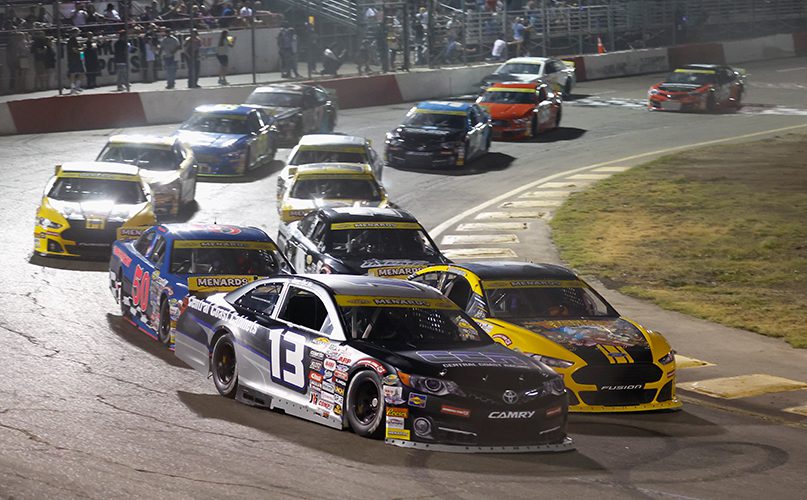
While the kids progress through Bandoleros, Legends and into full-bodied stock cars, Shepherd is hard at work teaching their parents how to sell sponsorship and build connections with team owners. If the process goes as planned, parents who initially possessed remedial knowledge about the business side of racing become de facto agents and managers for their children.
Love recalled the culture shock he experienced once he started competing in the Jr. Late Model Series. From his perspective, it was far more than just another step up the ladder. Love had to ascertain how to excel against other stellar young prospects while handling media responsibilities, as all races were aired on television.
Despite the pressure, Love said the environment crafted by Shepherd and everyone at Madera provided him a foundation that would eventually translate to success at NASCAR’s top levels.
“The biggest thing [for me] was being on TV,” Love said. “It allowed me to bring in quite a few sponsors for what I was doing at the time. Then I figured how to navigate interviews and learned how to talk on cameras. You’re putting yourself on a much bigger stage than you ever have been, so to do that at a young age allowed me to build a lot more relationships.
“There was a lot that went into the Jr. Late Model Series. The racing aspect was one small piece of it.”
Once he found a cadence behind the wheel, Love established himself as one of the best drivers in the Jr. Late Model Series during its early years. He earned his first championship as a rookie in 2017 before following that campaign with another title run, all while tallying eight victories.
Shepherd saw the talent Love possessed at a young age and knew he could one day thrive in the Cup Series. Love and his family had all the essential resources to progress through the Jr. Late Model Series, but Shepherd also did his part by ensuring Love had an established connection with one of NASCAR’s most renowned team owners.
“Jesse Love is now the perfect model for what we envisioned,” Shepherd said. “I introduced Jesse to Richard Childress when he was 12 years old at the West Coast Stock Car Hall of Fame. We talked a little about racing, encouraged them to exchange cell phone numbers and become friends.
“[During that same weekend], I sat down with Duke Love and engineered a plan that took Jesse all the way to a Cup car at age 22.”
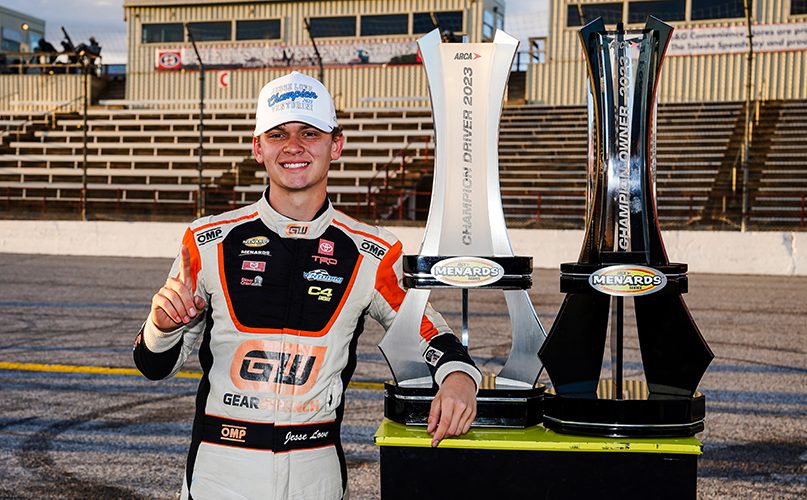
Shepherd and Duke’s plan came to fruition quickly. Jesse Love landed a full-time O’Reilly Series ride with Childress in 2024 after earning championships in the ARCA Menards Series and ARCA Menards Series West. One year later, Love made his Cup Series debut at age 20, piloting an extra car for Childress at Bristol Motor Speedway.
Love’s journey is one of many across the NASCAR and ARCA Menards Series platforms that has its origins in the Jr. Late Model Series. Two of the top three in the 2025 West Series standings, Kyle Keller and Robbie Kennealy, acquired key knowledge on and off track at Madera that helped each breakthrough for his first ARCA win.
Other notable drivers to come from the Jr. Late Model Series include two-time West Series champion Sean Hingorani, Ryan Vargas, Tanner and Tyler Reif, along with Hailie Deegan and Toni Breidinger.
All those drivers have made at least one West Series start. Shepherd understands how vital the West Series is to the developmental pipeline he maintains and does everything feasible to ensure his Jr. Late Model Series graduates find a seat on the platform.
“At any given time with the ARCA Menards Series West, 50 percent or more of the drivers are graduates of our Jr. Late Model Series,” Shepherd said. “Ron Drager, Steve York and I are on the phone constantly. I communicate like a PR person constantly with the team owners. I help place drivers, and I help secure sponsorship.”
Shepherd’s close ties to the West Series also extend into the Jr. Late Model Series itself. Nearly every team in the division either has a West Series program or is affiliated with one, which allows the drivers to build relationships with veteran crew members that can provide insight on what they can expect at the next level.
Each component of the Jr. Late Model Series creates an atmosphere Shepherd compared to a pressure-cooker, but he has received plenty of praise about the program from its alums, Love included. One complement Shepherd hears repeatedly from the graduates is how the Jr. Late Model Series closely mimics a normal weekend in the West Series.
For Love, one reason he believes the Jr. Late Model Series works so efficiently stems from the onslaught of information he obtained during his youth. It was easy for Love to comprehend all the fundamentals about racing instilled to him by Shepherd and Madera’s staff, principles he still abides by today.
“When you’re at that young age and people are trying to coach you about that stuff, it’s a very impressionable part of your life,” Love said. “At 9 to 14 years old, you are very impressionable as a person, so because of all that, you retain the information pretty well, and you’re very coachable.
“That’s where the saying ‘you can’t teach an old dog new tricks’ comes from. As you get older, you start to become less coachable.”
With all the success stories that have come out of the Jr. Late Model Series, Love would like to see the concept replicated in other regions across the United States.
Shepherd believes there is potential for a similar platform to emerge elsewhere but admits the undertaking requires immense dedication. For such a program to work, emphasis would need to be placed on keeping a young driver around for two of three years, something Shepherd has noticed is not common at a lot of tracks in the country today.
By design, the Jr. Late Model Series only keeps prospects for a few years so Shepherd can recruit efficiently. More alums continue to come out of the Jr. Late Model Series each year because of the structure Shepherd has in place, so he hopes tracks and teams take notice of what he has accomplished at Madera over the past decade.
The overall goal Shepherd has for his farm system is to help drivers discover their own identity in racing. In turn, they can inspire others who wish to become racers. Shepherd remembers how NASCAR drivers with blue-collar backgrounds resonated with fans back in the day and knows such a concept is still possible under the right circumstances.
For race fans who lived in Central California during the 1980s, Ernie Irvan was that role model. Irvan’s journey from an underfunded competitor to one of NASCAR’s best directly influenced Shepherd in his youth, which is why he believes it is imperative to create an environment where drivers with similar backgrounds can fulfill that part.
“When Ernie Irvan won the Daytona 500 in that Kodak No. 4 car for Morgan-McClure, I can’t tell you how many people went flying away from their TV and into their shops,” Shepherd said. “Every little kid and teenager wanted to be the next Ernie Irvan, so that Cinderella glass slipper has to fit every now and then. In the farm system, I tie that together.”
Shepherd said Cole Denton’s story perfectly represents the Cinderella concept. A first-generation driver from Mississippi, Denton’s parents confided in Shepherd that they did not have the money to support their son’s racing endeavors. Shepherd worked with them on selling sponsorship and building relationships that could benefit Denton over the long term.
Now Denton is set to embark on a full-time West Series season with Jan’s Racing Team; he’s one of many Jr. Late Model Series alums Shepherd is excited to watch in 2026. Another is Jace Hale, who won four races in a Pro Late Model last year and is fresh off his first attempt at the Snowflake 100 in Pensacola, Florida.
If everything goes according to plan, Shepherd would love to have Kyle Busch’s son Brexton competing in the Jr. Late Model Series in 2026. He would consider that a full-circle moment given his established relationship with Kurt.
With a fresh class of prospects getting ready for the next Jr. Late Model Series season, Love knows they are in good hands under Shepherd’s direction. Without all the media exposure and the connections he and his family developed through Shepherd, Love knows it would have taken him a lot longer to become an O’Reilly Series champion, if at all.
“They set me up for success at a young age,” Love said. “There’s definitely been a lot of challenges that come with trying to navigate the NASCAR world. There are drivers trying to learn stuff at the [O’Reilly] or Truck level that I learned when I was 12 years old. That’s the part I take out of it; I left [Madera] a lot more mature than I would have if I never did it.”
Love’s story, along with many others from the Jr. Late Model Series, is proof to Shepherd that a farm system similar to baseball can work in NASCAR. Even if another program like Madera’s never materializes elsewhere, Shepherd hopes more people in the industry make selling sponsorship a focal point when it comes to mentoring young drivers.
Having known Love for more than half his life, Shepherd said he has all the qualities needed to enjoy a long, successful career in NASCAR. Nothing is going to be guaranteed to Love as he continues his journey, but Shepherd knows he can use the knowledge obtained in the Jr. Late Model Series to build upon his growing list of accomplishments.
“To me, it almost feels like destiny,” Shepherd said. “Jesse is a future Cup champion without a doubt. He is so classy, carries the sport so well and is A+ in every category when it comes to representing the sport. I hope he gets the best arrangements with winning teams in Cup.
“Jesse will be one of the faces of our sport, and I’m very proud our sport is in the hands of someone like Jesse down the road.”
Love is the first driver from the Jr. Late Model Series to win a championship in one of NASCAR’s top three divisions. With so many other alums continuing to find their footing across the country, Shepherd is confident Love will not be the last.


![visit Sunoco3c [converted] website - opens in the same window](https://www.arcaracing.com/wp-content/uploads/sites/36/2020/01/Sunoco3c-Converted-291x180.png "visit Sunoco3c [converted] website - opens in the same window")


